Visiting Gokayama and Ainokura: UNESCO Heritage Guide
Most travelers board the morning tour buses from Takayama or Kanazawa, cross the bridge into Ogimachi, and assume they have seen the whole story. But Ogimachi is only the largest settlement in a scattered alpine chain. Farther down the Shogawa river canyon, across the Toyama border, the historic villages of shirakawa go and gokayama encompass two remote settlements that feel practically abandoned by modern commercial tourism.
These northern hamlets are Ainokura and Suganuma. Tucked into steep forested gorges, they get battered by five meters of winter snowfall and remain quiet even in peak autumn. If you want to see thatched farmhouses framed by working vegetable gardens rather than tour bus crowds, Gokayama is where you need to point your compass.
Book your shirakawa village experience:
Understanding the Historic Villages of Shirakawa Go and Gokayama
When UNESCO designated the region in 1995, it protected three distinct settlements. Ogimachi took the spotlight. The other two, grouped together under the umbrella of gokayama japan, retained an older rhythm of daily existence. Gokayama translates literally to "five valleys," referring to the precipitous folds carved by the Shogawa river system into Toyama Prefecture.
Isolation shaped everything here. Centuries ago, defeated warriors from the Taira clan supposedly retreated into these inaccessible ravines after losing the Genpei War. To survive the brutal winters, residents developed the steep-roofed architectural style known as gassho-zukuri, or "constructed like hands in prayer." If you study the steep 60-degree pitch of these roofs, you realize they were engineered for heavy snow shedding. The attic floors above were not living quarters; families used the warm air rising from floor firepits to cultivate silkworms and produce saltpeter for black gunpowder. You can read deeper into this unique timber framing in our guide to gassho-zukuri farmhouses and local museums.
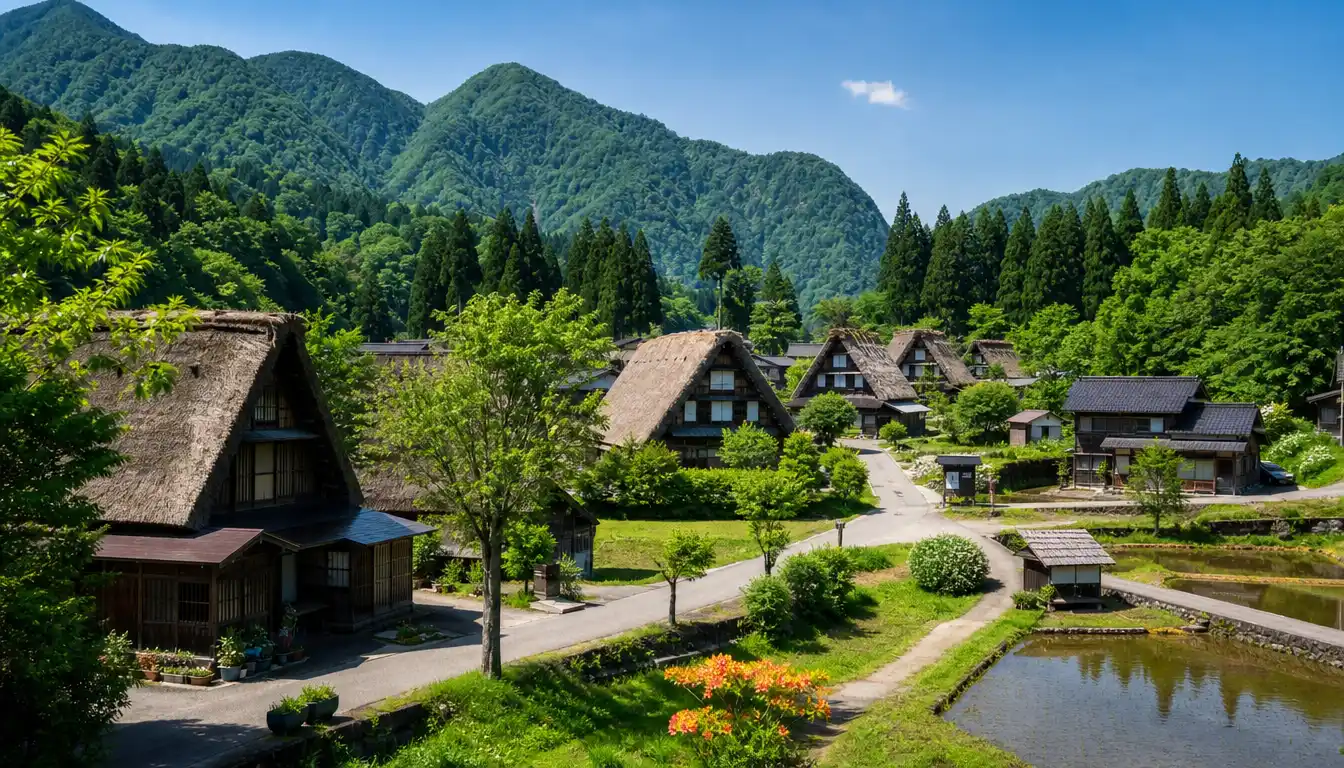
Unlike the larger village over the Gifu border, each gokayama historic village japan site remains a tight-knit residential community. People dry daikon radishes on the porch railings. Firewood stacks reach two stories high against exterior cedar walls. Walking down the stone paths here, you hear rushing brook water and birds instead of tour megaphone chatter.
Ainokura Gassho-Zukuri Village: Life on a Mountain Shelf
Ainokura sits perched on a high river terrace, surrounded by steep cedar forests and stepped rice terraces. It is the most isolated settlement within the historic villages of shirakawa gō and gokayama collective. Around 20 gassho-zukuri structures stand here, most dating from the late Edo to early Meiji periods. The oldest house in the village was built roughly four centuries ago.
The layout invites aimless walking. Dirt paths wind between vegetable plots where elderly residents tend seasonal greens beneath the towering gables. If you walk five minutes uphill along the signposted trail behind the northern houses, you hit a clearing that offers a sweeping view across the entire valley shelf. I think this viewpoint gives the most honest perspective of how tiny these mountain settlements actually are.
Pro tip: Hike up to the Ainokura observation point just after sunrise. Morning mist hangs low over the thatched roofs, and the morning light hits the cedar ridges before any day visitors arrive.
You can easily explore the entire footprint on foot within two hours, but rushing through misses the quiet details. Several traditional structures operate as small museums or workshops:
- Ainokura Folk Museum: displays traditional silkworm racks, snowshoes woven from wild vine, and mountain farming tools inside an original four-story farmhouse.
- Gokayama Washi Workshop: offers hand-papermaking sessions where you can press mulberry pulp into textured paper sheets within 20 minutes for around 800 yen.
- Yusuke: an exhibition house that lets you inspect the massive smoked roof timbers and rope lashings without modern nails or metal brackets.
A handful of farmhouses operate as family-run minshuku. Booking an overnight stay in ainokura village japan requires arranging it months ahead through the local tourist association. Dinner is usually grilled river trout, wild bracken, and mountain vegetables gathered from the surrounding slopes that very morning.
Electricity came late to this valley. As darkness falls, the entire village goes pitch-black except for a few warm yellow lights glowing behind rice-paper shoji screens.
Suganuma Gassho Zukuri Village: Small, Riverside, and Intimate
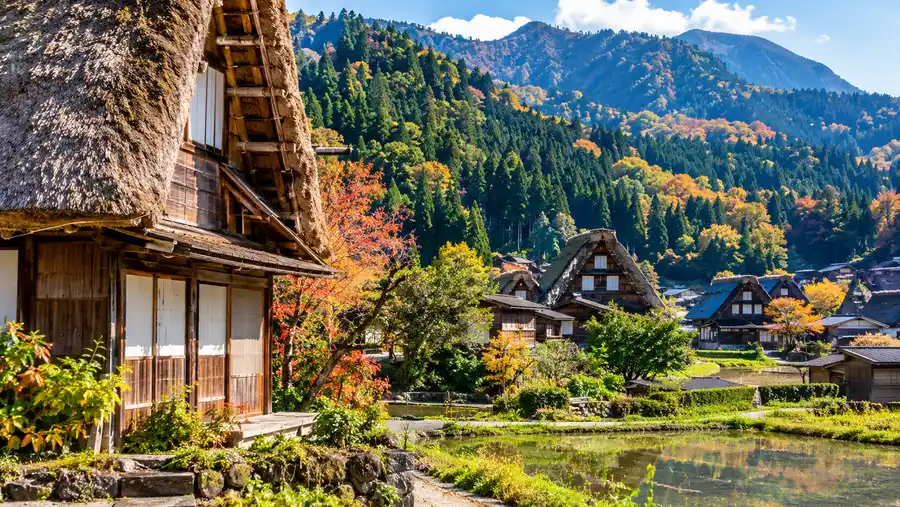
Down on the river floor, suganuma gassho zukuri village is even smaller than Ainokura. It contains just nine gassho-style farmhouses tucked against a bend in the turquoise Shogawa river. Route 156 runs high on the cliff above it, so you park in an upper lot and take an elevator down into the basin.
It takes about 35 minutes to walk every path in Suganuma. Because of its tiny footprint, it feels like a private museum compound at first glance, but families still live in several of these homes. Smoke drifts from chimney flues, and laundry hangs in covered side entryways.
Note: Suganuma has almost no commercial evening infrastructure. The small soba shops and local craft stands pack up and close by 16:00, so plan your meal schedule accordingly.
Two small museums in Suganuma explain local survival industries. The Saltpeter Museum preserves the tools used to produce potassium nitrate, a primary ingredient in gunpowder that Gokayama supplied secretly to the powerful Maeda clan during feudal times. Next door, the Folk Museum showcases the daily hemp-weaving and kitchen implements that sustained households cut off by winter drifts for months at a time.
Book your shirakawa village experience:
Comparing the Historic Villages: Ogimachi, Ainokura, and Suganuma
Choosing between these three locations depends entirely on what you want from your trip. Ogimachi has the grand scale, multiple open house museums, and dozens of street food vendors. The two gokayama villages offer peace, unpaved paths, and an atmosphere that feels much closer to how these mountain communities functioned a century ago.
I usually tell travelers that if you only have three hours on a rushed bus transit, Ogimachi makes logistical sense. But if you have a full day, stopping in both Shirakawago and Gokayama gives you the contrast needed to appreciate the architecture without feeling overwhelmed by crowds.
| Village | Valley Location | Preserved Gassho Houses | Atmosphere | Standard Parking Fee |
|---|---|---|---|---|
| Ogimachi (Shirakawa-go) | Gifu Basin | 59 | Bustling, heavily visited | 1,000 yen |
| Ainokura (Gokayama) | Toyama Mountain Terrace | 20 | Quiet, residential, scenic | 500 yen |
| Suganuma (Gokayama) | Toyama Riverbank | 9 | Compact, peaceful, historic | 500 yen |
Photographers often favor Ainokura because modern telephone poles have been buried underground, and vehicle access within the residential area is strictly limited. The historic villages of shirakawa gō and gokayama photos you see in museum archives look remarkably identical to the streetscapes found in Ainokura today.
Getting Between Shirakawa Go and Gokayama
Reaching the valley requires some schedule planning. The Kaetsuno World Heritage Bus runs between Takaoka Station or Shin-Takaoka Station in Toyama and Shirakawa-go in Gifu, stopping directly at both Ainokura-guchi and Suganuma along the way. For wider regional connections from major hubs, check out our route guide from Tokyo to Shirakawa-go.
Renting a car in Kanazawa or Toyama gives you far more flexibility. The drive along the Tokai-Hokuriku Expressway takes about an hour, threading through a series of long mountain tunnels before dumping you onto winding river roads.
- Bus stops require uphill walking: the Ainokura-guchi stop drops you on the main road, requiring an uphill walk of about 7 minutes to reach the village entrance.
- Luggage storage is limited: small coin lockers exist at the Ainokura information desk, but oversized suitcases might not fit on rural buses.
- Multi-day passes save money: Kaetsuno Bus sells a World Heritage ticket covering unlimited travel between Takaoka, Gokayama, and Shirakawa-go for around 3,500 yen.
- Winter tires are non-negotiable: if renting a car between December and March, confirm winter snow tires or your rental agency will turn you away.
Driving between Suganuma and Ainokura takes around 15 minutes. From Suganuma south to Ogimachi takes roughly 20 minutes across the Gifu border, making it simple to combine both in a single day trip if you get an early start.
Frequently Asked Questions about historic villages of shirakawa go and gokayama
Are there historic villages of shirakawa gō and gokayama tickets required for entry?
No general entry ticket is required to walk around the village grounds in Ainokura, Suganuma, or Ogimachi. However, parking fees apply for private vehicles, and small individual admission fees between 300 and 400 yen are charged to enter preserved farmhouse museums.
Can you see both Shirakawa-go and Gokayama on the same day?
Yes, by using the Kaetsuno World Heritage Bus or a rental car. A sensible schedule involves exploring Ogimachi in the morning for three hours, taking a 20-minute bus north to Suganuma for lunch, and spending the afternoon wandering through Ainokura.
How do historic villages of shirakawa gō and gokayama reviews compare between the sites?
Traveler reviews consistently praise Ogimachi for its grand viewpoints and extensive dining options, while Ainokura and Suganuma receive higher marks for tranquility, preservation, and an authentic rural atmosphere free of souvenir storefronts.
Quick Reference
- Ainokura has 20 preserved farmhouses; Suganuma has 9
- Connected by the Kaetsuno World Heritage Bus line
- Ainokura parking fee: 500 yen maintenance donation
- Best viewpoint: 5-minute trail behind Ainokura
Book your shirakawa village experience:
Worth the Trip?
If you only travel to check off famous sights, Ogimachi will give you the classic picture postcard. But if you care about the silence of the Japanese Alps and want to understand how alpine communities lived before tour buses arrived, make the detour into Gokayama. Spend two quiet hours walking between the rice paddies in Ainokura, breathe the cedar air, and you will understand why this secluded river valley earned its place on the world heritage map.
Read more about shirakawa village.