Shirakawa-go Weather, Live Cam, and Autumn Foliage Guide
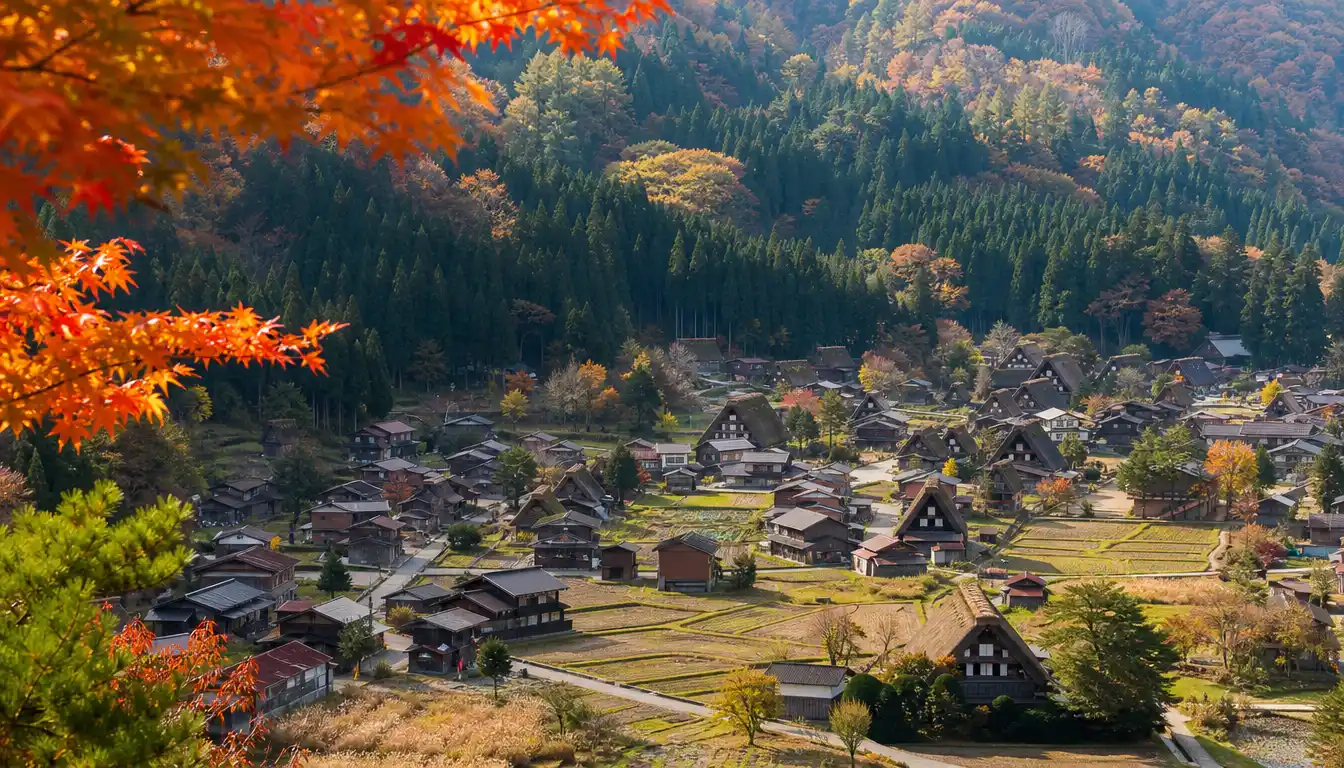
A heavy mist usually settles over the Shogawa River long before sunrise. By eight in the morning, the sun hits the steep thatched roofs of Ogimachi, burning away the valley cloud and leaving drops of water rolling down straw eaves that have stood for two hundred years. Getting an accurate read on shirakawago weather is notoriously tricky if you rely on standard regional forecasts. The village sits in an isolated river basin surrounded by dense alpine peaks, creating a temperamental microclimate that often defies whatever the broader Gifu Prefecture forecast claims.
Planning a trip here requires looking at localized data rather than generic weather apps. Whether you want to catch the valley blazing with crimson maples or simply want to know if you need heavy waterproof boots next Tuesday, this guide breaks down the real seasonal conditions, how to make the most of autumn, and why checking a real-time village camera feed will save you from major travel mistakes.
Book your shirakawa village experience:
Understanding Shirakawa Village Weather Across the Seasons
The climate in this valley is extreme. Ogimachi belongs to the Ryohaku mountain system, which catches weather fronts moving in directly from the Sea of Japan. In winter, this means immense walls of snow. In spring and summer, it means humid warmth broken up by sudden, drenching downpours that echo through the valley like thunderclaps. You can walk through the village in bright sunshine, step inside a farmhouse museum for twenty minutes, and come out to a grey curtain of rain.
Shirakawa village weather shifts radically across a calendar year. Summer averages around 26°C in July and August, yet the surrounding rice paddies make the air feel thick and heavy. June brings the start of the rainy season, delivering upwards of 230 millimeters of rain across the month. Winter drops temperatures well below freezing, burying paths under two to three meters of snow pack. If you want to compare seasonal realities, late autumn offers perhaps the sharpest day-to-night temperature drops of any season, often swinging 14 degrees between noon and midnight.
This volatility is precisely why the gassho-zukuri farmhouses exist. Their roofs slope at 60-degree angles not just for aesthetic charm, but to shed immense loads of heavy wet snow and shed torrential autumn rains before moisture rots the thatch underneath. When you look up at those massive roofs, you are looking at centuries of architectural adaptation to this specific mountain climate.
| Month | Average High (°C) | Average Low (°C) | Rainfall (mm) | Conditions Overview |
|---|---|---|---|---|
| September | 23°C | 14°C | 210 mm | Lingering summer warmth, humid spells, occasional typhoons |
| October | 17°C | 7°C | 165 mm | Cool mornings, crisp afternoons, early foliage appearing |
| November | 11°C | 2°C | 190 mm | Peak foliage turning to bare branches, first dustings of snow |
| December | 4°C | -3°C | 280 mm | Deep winter setting in, heavy snowfall, icy village lanes |
Why Autumn Shirakawago Deserves More Attention Than Winter
Everyone talks about winter. Winter photos are on the tourism posters, with glowing cottage windows poking out of white drifts. Honestly, visiting autumn shirakawago gives you a far more nuanced experience. The valley hillsides turn rust, copper, and fiery amber, contrasting against the grey-brown thatch and the bright green moss growing on stone drainage culverts. Farm gardens overflow with cosmos flowers, and orange persimmons hang drying under the eaves of almost every wooden porch.
The timing for foliage in this part of Gifu depends heavily on elevation. Up on the Hakusan White Road, the leaves begin turning in early October. Down on the flat floor of Ogimachi village, peak color usually lands between October 25 and November 10. Cold mountain winds from the north dictate how long those leaves hang onto the branches. A single night of heavy frost around November 5 can strip the maples bare within forty-eight hours.
Visiting shirakawago in autumn also means you can walk around without fighting slick sheets of ice. You can explore the dirt trails behind the village, walk along the riverbanks, and wander between the paddies without wet snow soaking through your trousers. The air carries the rich scent of damp earth, dried grass, and woodsmoke from the stoves locals light to heat their workshops.
Pro tip: Hike up to the Shiroyama viewpoint via the dirt walking trail around 6:45 AM if you want to watch the valley fog break across the maple canopy before tour buses arrive from Takayama.
If you are planning around the foliage stages, consider what you want to see most:
- Early color (mid-October): Upper mountain ridges turn orange while the village floor remains lush and green, offering vivid visual contrast.
- Peak foliage (late October to early November): Maples and ginkgo trees throughout Ogimachi turn deep scarlet and bright gold; village walking paths fill with fallen leaves.
- Harvest wrap-up (mid-November): Rice paddies are cut back to golden stubble, persimmons hang in heavy clusters, and hillsides fade into quiet bronze tones before the first winter flakes fall.
Checking the Shirakawago Live Cam Before You Catch the Bus
Because the village sits behind high ridgelines, weather forecasts generated for nearby Takayama or Kanazawa are frequently wrong about Ogimachi. A front hitting Kanazawa on the coast might be blocked by Mount Haku, leaving the village completely dry. Alternatively, clear skies in Takayama can coincide with thick cloud cover trapped directly over Shirakawa. The single most reliable tool you have is a local camera feed.
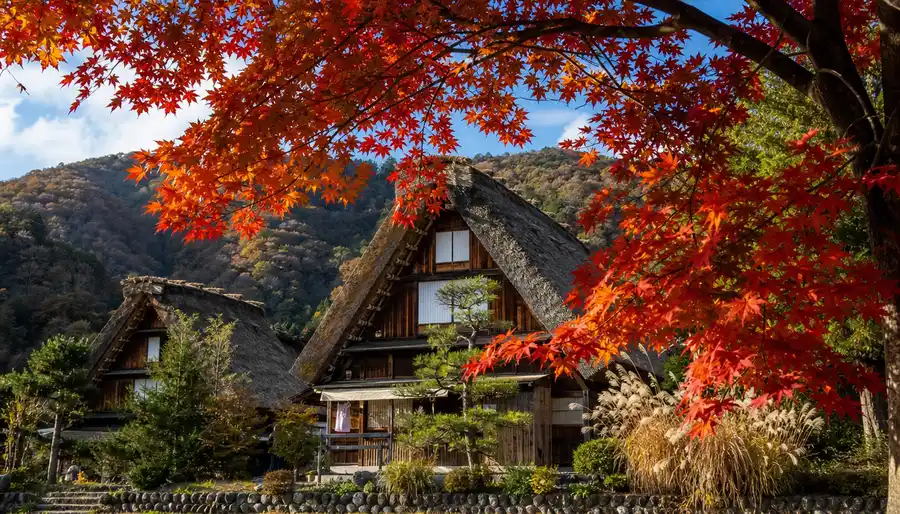
Pulling up a shirakawago live cam before boarding your morning highway bus lets you see what is actually happening on the ground. Several public feeds operate year-round, with the most famous one positioned up at the Shiroyama viewpoint looking down across the entire settlement. A quick look tells you immediately whether the valley floor is drenched in rain, blanketed in white morning fog, or glowing in direct sunlight.
I always pull up the shirakawago live camera while having breakfast in Kanazawa or Nagoya. Seeing the current conditions lets you adjust your layers before leaving your luggage at the train station lockers. If the camera shows a dense, low-hanging cloud deck over the farmhouses, you will want an outer windbreaker and warm gloves, because humidity trapped in that mountain bowl cuts straight through light cotton shirts.
Note: Public webcam feeds in the valley occasionally lose connectivity during severe autumn windstorms or heavy rain, so always glance at the tiny digital timestamp on the video feed to make sure you are not looking at a frozen frame from yesterday.
Watching the camera feed across several consecutive days before your trip also teaches you the village's daily pattern. During shirakawago fall, the basin typically starts under thick white ground mist at 6:30 AM, clears into bright blue sky by 9:30 AM, and cools down sharply by 3:30 PM as the sun dips behind the western peaks.
Book your shirakawa village experience:
Packing and Dressing for Shirakawa Village Weather
Packing for this region is about managing rapid temperature swings. You will be walking outside on damp gravel paths, climbing wooden stairs inside unheated farmhouses, and standing on breezy overlook decks. Dressing in heavy, rigid layers is a mistake because you will sweat walking uphill and freeze the moment you stop moving.
Footwear deserves the most thought. Ogimachi is an open agricultural village, not an outdoor theme park. Many paths between the historic houses are packed gravel, compacted dirt, or raised stone edges alongside fast-flowing irrigation ditches. Morning frost makes wooden bridge planks extremely slick, and autumn rain quickly turns dirt shoulders into soft mud. Leave canvas sneakers and smooth-soled fashion boots at your hotel.
- Sturdy, water-resistant shoes: Choose footwear with deep rubber tread; damp timber and wet cobblestones around the village canals are surprisingly slippery.
- Warm, removable socks: You must remove your shoes to enter every historic house museum, and those centuries-old cedar floorboards feel like ice beneath your feet in late October.
- A lightweight rain shell: Mountain downpours arrive without warning, making an easily packable waterproof jacket far more practical than carrying a bulky umbrella down narrow paths.
- Mid-weight fleece or wool sweater: Ideal for layering during the late afternoon drop when temperatures plummet from 16°C down to 5°C in roughly two hours.
Navigating Fog, Rain, and Sudden Chills in the Valley
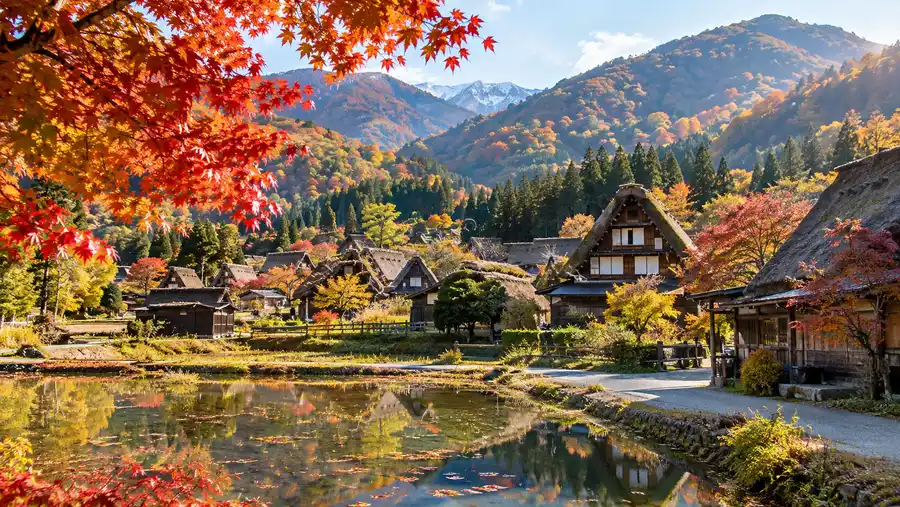
Rain is not a reason to cancel your trip to Shirakawa-go. In some ways, overcast skies and light drizzle suit the melancholy, rustic atmosphere of the gassho-zukuri houses better than harsh midday glare. When grey cloud settles low over the valley, dark cedar walls turn almost black, and the steep straw roofs look ancient and weathered. Water rushes loudly through the narrow stone canals flanking the lanes, carrying fresh mountain runoff right past the doorways.
When bad weather rolls in, adjust your pacing. The village offers plenty of shelter if you know where to look. Step into one of the multi-story family homes like Wada House or Nagase House to study the massive timber beams held together solely by natural rope lashings. Sitting near the sunken hearth (irori) on the ground floor while aromatic smoke drifts up into the roof rafters is one of the best ways to warm up while waiting out a morning rainstorm. You can find several other heritage spots and craft shops scattered across town by checking out various things to do in Shirakawa-go beyond the standard observation deck walk.
Food is another practical way to beat the valley chill. Small wooden food stalls throughout the village sell grilled Hida beef skewers, hot sweet red bean soup with mochi, and steamed buns stuffed with wild mountain vegetables. Ducking into a family-run noodle shop for a steaming bowl of buckwheat soba topped with local mushrooms will restore your energy when November winds start whistling between the storehouses.
If you encounter heavy morning fog, do not rush up to the viewpoint right away. Wait down in the village. Walking through Ogimachi when visibility drops to forty meters feels otherworldly; the massive rooflines emerge slowly from the white mist like giant ships floating in a quiet sea. By midday, the air almost always clears, giving you plenty of time for panoramic hilltop photography before the afternoon buses head out.
Frequently Asked Questions about shirakawago weather
What is the coldest month to visit Shirakawa-go?
January and February are the coldest months by far, with daily low temperatures averaging between -4°C and -8°C. Snow depths frequently reach over two meters during these months, requiring heavy thermal layers and insulated snow boots.
When is the best time to see autumn foliage in Shirakawa-go?
Peak autumn foliage in the village center generally occurs between late October and the first week of November. Colors appear slightly earlier, in early to mid-October, on the higher mountain passes surrounding the village.
Does it rain a lot in Shirakawa-go during autumn?
Yes. October and November see between eleven and fourteen rainy days per month. Rain showers can be intense, so carrying a reliable waterproof jacket and wearing water-resistant footwear is strongly advised.
Where can I find an active Shirakawago live cam?
The Shirakawa Village official tourism association and local transport operators maintain public live webcams. The most popular camera angle points over the village from the Shiroyama Viewpoint, offering a real-time perspective on cloud cover, rainfall, and snow accumulation.
Quick Reference
- Peak autumn foliage: late October to early November
- Average autumn daytime temperatures: 10°C to 18°C
- Annual rainfall: roughly 2,300 mm spread across all seasons
- Essential footwear: water-resistant shoes with good grip
Book your shirakawa village experience:
Before You Head into the Mountains
Visiting this pocket of Japan rewards travelers who pay close attention to environmental conditions. Mountain weather can turn a magical day into a miserable, damp ordeal if you show up in thin trainers and light cotton sweaters. Keep an eye on local conditions, check the camera feed on the morning of your trip, and layer appropriately for wild daytime temperature swings. Shirakawa-go has survived the elements for centuries; with a little preparation, you will enjoy every minute of your time under its towering thatched roofs.
Read more about shirakawa village.